








Why is machine vision gaining so much traction in Singapore?
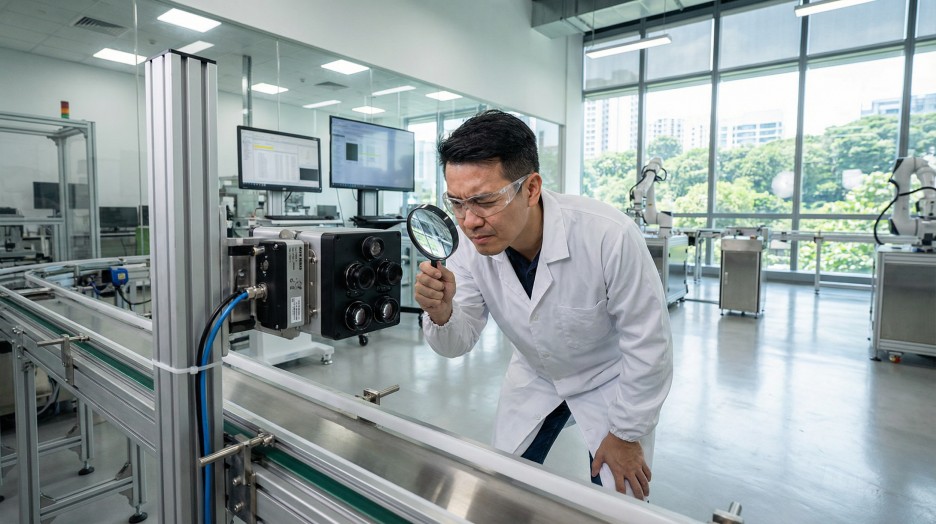
In recent years, Singapore has emerged as a regional hub for advanced manufacturing and automation. One of the key drivers behind this transformation is the adoption of machine vision technology. But why exactly is machine vision becoming such a critical component for industries here? Simply put, machine vision enables automated systems to “see” and analyze objects with incredible precision and speed, which is essential for quality control, robotics, and process optimization.
Singapore’s competitive manufacturing landscape demands high efficiency and zero tolerance for errors, especially in sectors like electronics, pharmaceuticals, and food processing. Machine vision systems meet these needs by providing reliable, real-time inspection and measurement capabilities. They help manufacturers reduce waste, improve product consistency, and accelerate production cycles — all of which are crucial in maintaining Singapore’s reputation for high-quality output.
How do machine vision lenses impact the quality of imaging?
At the heart of any machine vision system is the lens. The choice of a machine vision lens can make or break the accuracy of the entire setup. Unlike regular camera lenses, machine vision lenses are specifically designed to deliver sharp focus, minimal distortion, and consistent performance under challenging industrial conditions.
In Singapore’s humid and sometimes dusty environments, having a lens that resists environmental factors and maintains optical clarity is essential. High-quality machine vision lenses ensure that cameras capture crisp and detailed images, which is vital for downstream processing like defect detection or measurement. This precision enables manufacturers to trust the automated inspection results, reducing the need for manual rechecks and speeding up throughput.
Moreover, different applications require different lens characteristics such as focal length, aperture, and field of view. For example, inspecting tiny semiconductor components demands lenses with high magnification and minimal aberration, while broader inspections on assembly lines may prioritize wider views. Partnering with suppliers who understand these nuances and offer tailored machine vision lenses is key to unlocking optimal system performance in Singapore’s varied industrial sectors.
What advantages do USB3 cameras offer for machine vision applications?
When it comes to capturing high-quality images quickly, the camera’s interface plays a pivotal role. USB3 cameras have become increasingly popular in Singapore’s manufacturing and research facilities for their balance of speed, cost, and ease of use.
USB3 technology supports high data transfer rates—up to 5 Gbps—which allows cameras to stream full HD images at high frame rates without lag. This capability is critical for applications such as real-time defect detection or robotic guidance, where delays can cause costly errors or slowdowns. Additionally, USB3 cameras benefit from plug-and-play compatibility and widespread software support, making them accessible even for smaller enterprises or research labs in Singapore.
The convenience of USB3 cameras also extends to installation and maintenance. They typically require less cabling and can be powered directly through the USB connection, simplifying integration into existing setups. This ease of use helps Singaporean companies implement machine vision solutions more rapidly and with less technical overhead, accelerating their path towards Industry 4.0 readiness.
Why might a GigE camera be better suited for certain industrial environments?
While USB3 cameras shine in many scenarios, some Singapore industries require even more robust solutions, especially when multiple cameras must be networked over longer distances. This is where GigE cameras come into play.
GigE, short for Gigabit Ethernet, allows cameras to transmit data at speeds up to 1 Gbps over standard Ethernet cables. The key advantage here is the ability to cover distances up to 100 meters without signal degradation, which is far beyond USB3’s practical range. This makes GigE cameras ideal for large-scale manufacturing floors or inspection lines spread across spacious facilities common in Singapore’s industrial estates.
Furthermore, GigE cameras support advanced networking protocols and synchronization features, enabling complex multi-camera systems that coordinate image capture for 3D imaging or detailed assembly verification. Their reliability and flexibility in harsh industrial environments also add to their appeal.
For Singaporean companies aiming to implement smart factories with interconnected devices and centralized monitoring, investing in GigE cameras can provide a scalable and future-proof imaging backbone.
How can businesses in Singapore choose the right machine vision components?
Understanding the specific needs of each application is essential for selecting the right machine vision components, including lenses and cameras. Factors such as inspection speed, required resolution, environmental conditions, and budget must be carefully balanced.
For many Singaporean manufacturers, working with experienced suppliers who offer a comprehensive range of products and technical support is invaluable. Companies like Voltrium System Pte Ltd provide not only high-quality machine vision lenses but also a variety of camera options including USB3 and GigE models. Their expertise helps clients tailor solutions that maximize accuracy and efficiency while minimizing integration challenges.
With Singapore’s rapid push towards automation and smart manufacturing, machine vision technology is no longer a luxury but a necessity. By choosing the right lenses and cameras, businesses can unlock new levels of quality control, reduce operational costs, and remain competitive in a demanding global market.
Final thoughts: Why investing in machine vision matters now
Machine vision is a cornerstone of Singapore’s industrial innovation strategy. Its ability to transform visual inspection and automation processes is already delivering measurable benefits across multiple sectors. Whether it’s a compact USB3 camera for a precision electronics line or a robust GigE camera for large-scale automotive assembly, selecting the right components is crucial.
For companies looking to stay ahead, understanding the advantages of quality machine vision lenses and camera technologies like USB3 and GigE is the first step. Partnering with knowledgeable suppliers ensures solutions are optimized for Singapore’s unique industrial landscape, helping businesses thrive today and in the future.